Aeris Robotics
Autonomous aerial systems, built like real infrastructure.
DroneOS is the infrastructure layer. AI Fleet Command is the first operational workflow built on top of it.
We are building software for remote drone control, rapid response workflows, and operator-centered aerial systems that can move from simulation into real deployments.
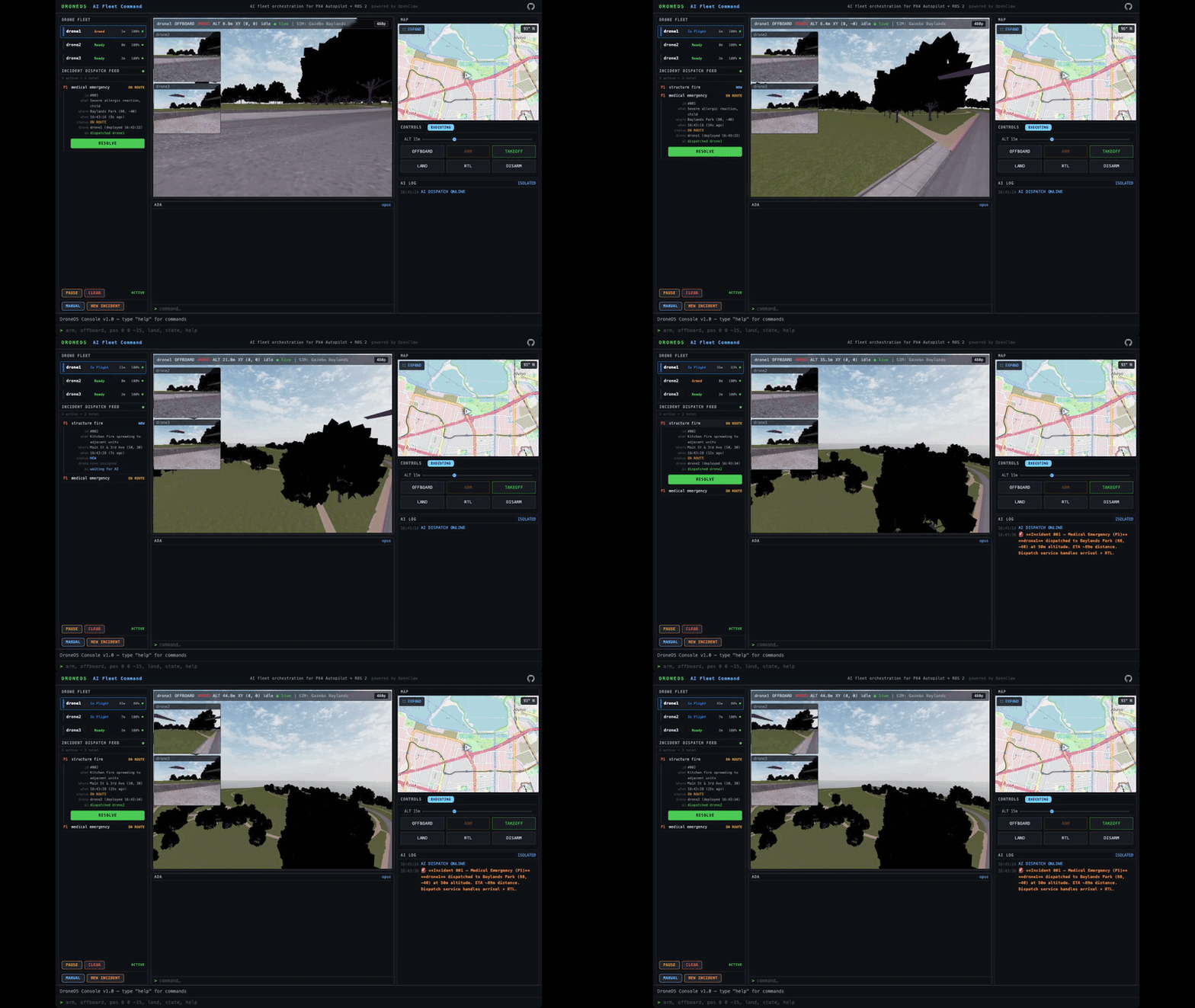
The emergency-response demo is the proof point. The go-to-market path is private-site response: autonomous aerial dispatch for industrial properties, logistics yards, construction sites, utility assets, and other environments where operators need eyes on scene fast.
DroneOS infrastructure
The open-source control stack underneath the system, including PX4, ROS 2, simulation, deployment tooling, and operator-facing drone control APIs.
AI Fleet Command
The first application layer built on DroneOS, including incident intake, drone selection, dispatch logic, and operator-supervised mission execution.
Operator-centered workflows
Built for real operations, not black-box autonomy claims. The focus is faster incident verification, live situational awareness, and practical human oversight.
Where we start
We are not leading with public-sector procurement. The first market is private-site operations: customers who already care about response time, incident verification, and remote visibility across large or hard-to-monitor properties.
Industrial facilities
Autonomous aerial response for large sites where operators need faster incident verification, broader coverage, and live context before sending people into the field.
Logistics yards and storage sites
Useful where theft, perimeter alerts, and after-hours events make static cameras and ground patrols too slow or too limited on their own.
Construction and equipment yards
A strong early fit for temporary or evolving sites where layout changes often, blind spots are common, and remote situational awareness matters.
Utility, energy, and critical assets
Aerial response workflows for distributed sites where rapid visual confirmation and remote operator visibility can improve how incidents are triaged.